

White Smoke From the Exhaust: When It Is Nothing and When to Stop Driving
Short answer
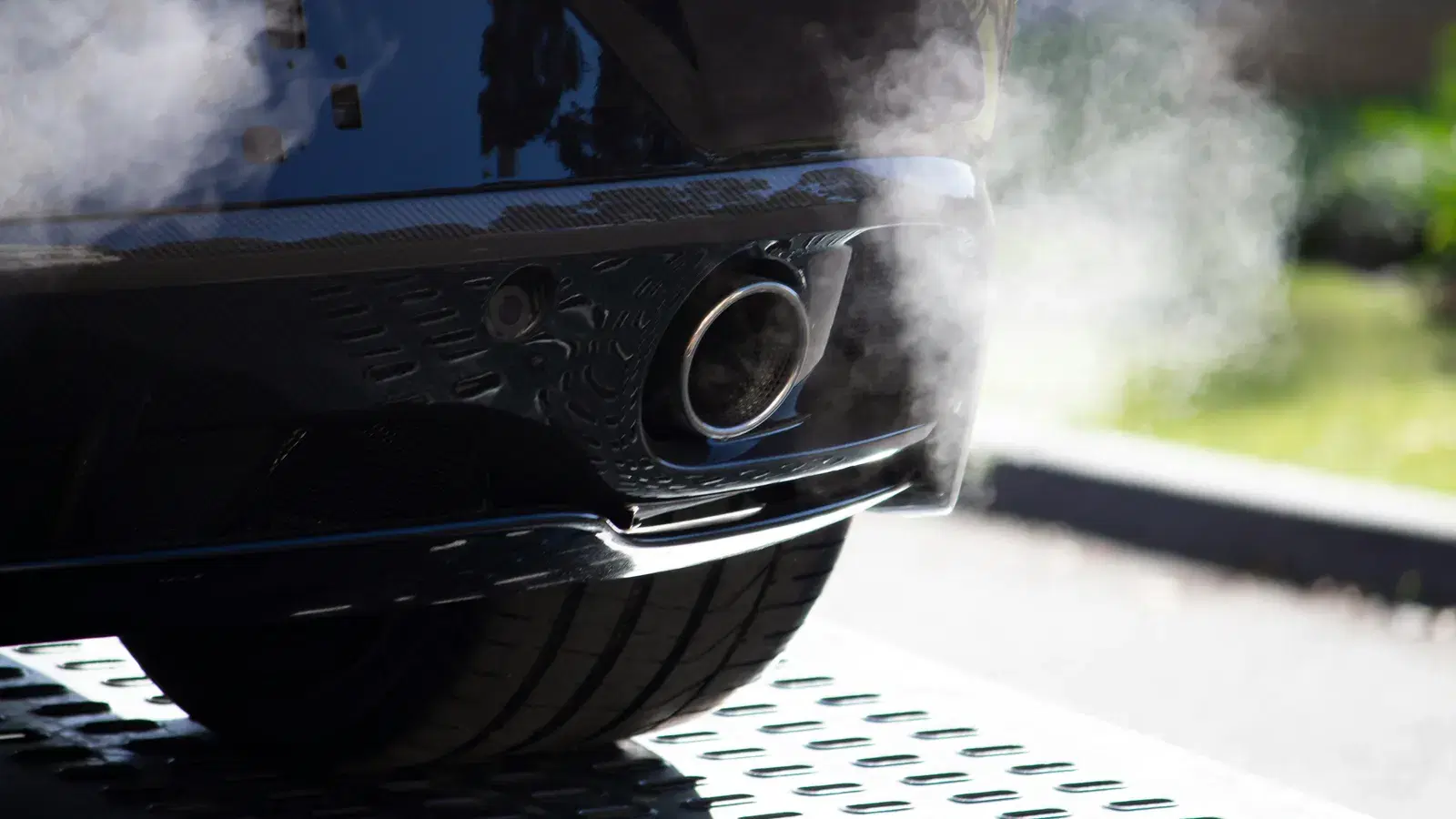
Thin white vapour that clears once the engine warms up is condensation, and it is normal. Thick white smoke that keeps coming at operating temperature, often with a sweet smell and a falling coolant level, usually means coolant is burning in the cylinders. Stop driving and have the cooling system tested.
At a glance
- White vapour on a cold start that clears as the engine warms is condensation, not a fault.
- Thick white smoke that persists when the engine is warm usually means coolant is getting into the cylinders.
- The usual causes are a failed head gasket or a cracked head or block. On diesels, a leaking EGR cooler can do it too.
- Stop driving. Coolant collecting in a cylinder can damage pistons or connecting rods on the next start.
- A pressure test and a combustion gas test of the coolant confirm it without taking the engine apart.
Someone pulls up behind you at the lights and there is a cloud coming out the back of your car that was not there last month.
Exhaust smoke is one of the few faults that tells you something useful before anything has been tested. The colour narrows it down straight away. White is the one worth understanding properly, because one version of it is completely normal and another version means stop driving and call a tow truck.
Is it smoke, or just condensation?
If it is thin, drifts away quickly and stops once the engine is warm, it is condensation and nothing is wrong. If it is thick, hangs in the air and is still there at full operating temperature, it is not.
On a cold Melbourne morning plenty of cars produce a white plume for the first minute or two. Water vapour is a normal by-product of combustion, and as the AA explains, "moisture from the air collects inside the exhaust system" overnight. It gets pushed out as vapour while the engine warms up.
If you are clear by the end of the street, you can stop worrying.
What does thick white smoke from the exhaust mean?
It usually means coolant is getting into the combustion chamber and being burnt. Auto Express puts it plainly: smoke that "doesn't stop even when the car is up to working temperature" is still steam, but it is caused by "your car's coolant leaking into the engine." It often carries a faintly sweet smell. Once you have smelt it you do not forget it.
Something is letting coolant into a cylinder. The AA lists the usual causes as "a blown head gasket, cracked engine block or a damaged cylinder head":
- A failed head gasket, which is the one everybody jumps to
- A cracked cylinder head or block, often the aftermath of a previous overheat
- On a diesel, a leaking EGR cooler, which carries coolant into the exhaust or intake
There is one exception worth knowing. On a diesel, white smoke can come from the fuel system rather than the coolant. The AA notes that "faulty or leaking fuel injectors" can cause it, for a completely different reason.
The supporting evidence matters as much as the smoke itself. Check the coolant level with the engine cold. Look at the expansion tank for discolouration or what Professional Motor Mechanic calls "a creamy sludge in the header tank". Pull the dipstick and look for milky oil. Think about whether the temperature gauge has been behaving oddly.
A car with white smoke, a dropping coolant level and a wandering temperature gauge is telling you the same thing three different ways.
Is it safe to drive with white smoke from the exhaust?
No. Thick white smoke with coolant loss is a stop driving fault, not a drive it gently fault. The AA's advice is that "it's not recommended to continue driving your car if there's white smoke coming from the exhaust." Have it towed.
Most faults give you some grace. This one does not, and it is worth knowing why.
Coolant does not compress. If enough of it collects in a cylinder while the engine is stopped, the next start can do serious damage. MS Motorservice, writing about leaking EGR coolers, describes coolant collecting in the combustion chamber and "severe damage to pistons, cylinders or connecting rods" when the engine is started. At that point the repair stops being a gasket and becomes an engine.
On top of that, the coolant loss means the engine is trying to cool itself with less than it needs. Jiffy Lube warns that driving on it "can lead to significant engine damage, including a warped or cracked cylinder head."
What do blue and black smoke mean?
Blue or grey smoke means oil is burning. Black smoke means fuel is not burning completely, because the engine is getting too much fuel or not enough air. White, blue and black point to three different systems, which is why the colour is worth noting before anything else.
| White (thick, when warm) | Blue or grey | Black | |
|---|---|---|---|
| What is burning | Coolant | Engine oil | Excess fuel |
| Smell | Faintly sweet | Burning oil | Fuel, sooty |
| Common causes | Head gasket, cracked head or block, EGR cooler on diesels | Worn valve stem seals or piston rings, turbocharger | Injectors, air supply, turbocharger, blocked particulate filter on diesels |
| Urgency | Stop driving | Get it checked soon | Get it checked soon |
Blue smoke is oil. Auto Express notes that on a high-kilometre car "the valve seals or piston rings are worn", and on a turbocharged car it can be "a worn-out turbocharger". Do not assume the turbo, though. Garrett, which makes turbochargers, says that "many instances of oil leakage are wrongly blamed on a perfectly functioning turbo", and that the leak is often a symptom of another problem.
Black smoke is fuel. On diesels, the RACV lists clogged or malfunctioning injectors, a dirty air filter, an underperforming turbocharger, and a blocked particulate filter on cars that only do low-speed town driving.
Each colour has several possible causes, some cheap and some not, which is exactly why guessing from a forum thread is a poor substitute for testing.
How is the cause of white smoke diagnosed?
By confirming when it smokes, then testing the cooling system for pressure loss and for combustion gas in the coolant. Those two tests confirm or rule out a head gasket or crack without dismantling anything. Compression testing and a scan then narrow down which cylinder is affected.
Confirm the colour and the conditions. When does it smoke. Cold or hot. Idling or under load. Constantly or only on startup. Each answer narrows the field.
Pressure test the cooling system. An internal leak does not leave a puddle, but it will not hold pressure either. How the system loses pressure, and how quickly, tells us a great deal.
Test for combustion gases in the coolant. This is the direct test for a head gasket. MOTOR recommends a combustion leak tester "to confirm your pressure test results", using a chemical that "changes color when combustion gases are present in the coolant." Professional Motor Mechanic notes it can pick up "a blown head gasket, or even a cracked head or cylinder block."
Compression and leak-down testing. These show which cylinder is affected and whether it is sealing. Whether the cause is the gasket or a crack is sometimes only certain once the head is off, and that is the point where the repair becomes a very different conversation about the car's future.
Full scan on the factory platform for your marque. Stored faults, misfire counters and live data often identify the affected cylinder before anything comes apart.
You see the results before you approve anything. Photographs of what we found, a written quote, and a straight explanation of what each option costs.
Should you pour in a head gasket sealer?
We would not. A sealer treats the symptom, not the cause, and a head gasket or a cracked head that is letting coolant into a cylinder still needs to be diagnosed and repaired properly.
They are sold as head gasket repairs. What they actually do is circulate a material designed to block gaps through a system full of narrow passages that are meant to stay open, including the radiator, the heater core and, on many European engines, an oil cooler.
It also puts off the testing that tells you what is actually wrong, while the engine keeps running on a fault that can get worse.
If the car is genuinely at the end of its life and you need a fortnight out of it, that is a fair conversation to have honestly. Otherwise leave it alone.
We diagnose it. We fix it.
If you have thick white smoke and you are losing coolant, do not drive it in. Call us and we will talk through whether it needs towing.
Diagnostics start at $145, and that covers the testing described above rather than a code read and a guess. If the test confirms a gasket or a crack, we will explain what the engine repair involves before anything starts.
We are in Dandenong, five minutes from the highway, with off street parking and early drop off. Book a diagnosis, or see which European marques we work on.
Sources
- White car exhaust smoke: what does it mean and how to fix itThe AA
- Car exhaust smoke: what do the different kinds and colours of smoke mean?Auto Express
- What does white smoke from the exhaust mean?Jiffy Lube
- Creeping coolant lossMS Motorservice
- Blown head gaskets: how to detect themProfessional Motor Mechanic
- Plugging the head gasket dikeMOTOR
- Cooling system diagnosisMOTOR
- Why your diesel ute or SUV is blowing black smokeRACV
- The turbocharger oil and gas sealing systemGarrett Motion
Common questions
- Is white smoke from a diesel always coolant?
- No. On a diesel, white smoke can also come from the fuel system, such as dirty, worn or leaking injectors, where fuel is not burning properly. That is a different fault from burning coolant, and the coolant level and a scan help tell the two apart.
- What can I check myself before bringing the car in?
- With the engine cold, check the coolant level in the expansion tank and look for a creamy sludge in it. Check the dipstick for milky, discoloured oil. Never open the cooling system while the engine is hot. Note whether the temperature gauge has been behaving oddly.
- Why am I losing coolant with no puddle under the car?
- Because the leak can be internal. Coolant getting past a head gasket, a crack or, on a diesel, a leaking EGR cooler is burnt or carried out with the exhaust rather than dripping onto the driveway. A cooling system pressure test is how an internal leak is found.
- Can a car have a head gasket problem without white smoke?
- Yes. A gasket can leak combustion gas into the cooling system without burning much coolant, which shows up as overheating or bubbles in the coolant rather than smoke. That is why a combustion gas test of the coolant matters more than the colour of the exhaust.
Related reading
The Temp Gauge Climbs in Traffic But It Is Fine on the Freeway
A 2016 Mercedes-Benz C300 that ran warm at idle and normal at speed, with no puddle on the driveway. What a cracked thermostat housing looks like early.
There Is Brown Sludge in My Coolant Tank
Search that symptom and the internet says head gasket in four seconds. Four faults produce it, at wildly different costs. Do not guess at this one.
I Keep Topping Up the Coolant But There Is Nothing on the Driveway
Coolant going down every few weeks with nothing under the car. On VW Group 1.8 and 2.0 turbo petrol engines that is often a leaking water pump housing.
Want it looked at properly?
Factory-level diagnostics for eighteen European marques, and a written quote with photographs before anything is authorised.